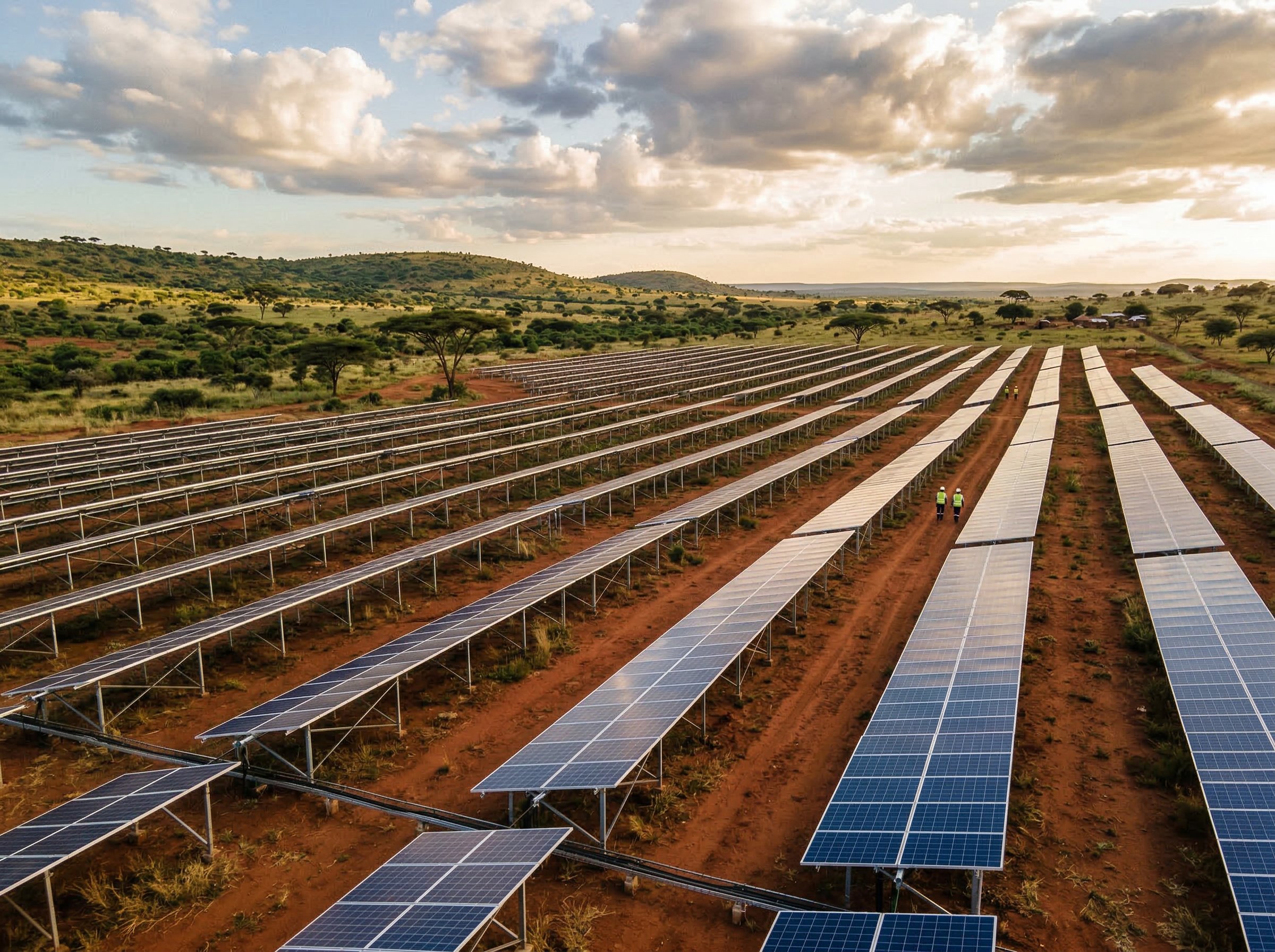
The Capital Map Has Changed
Sub-Saharan Africa (SSA) is no longer a marginal allocation in global institutional portfolios — it is a contested destination. A decade ago, the region's investment landscape was shaped almost entirely by development finance institutions (DFIs) and a narrow band of specialist private equity managers. That architecture has been fundamentally redrawn. Sovereign wealth funds from the Gulf, pension capital from Europe and South Africa, Chinese BRI-linked investment, and — most significantly — an emerging domestic institutional capital base have converged on a region that now holds more than $1 trillion in state-owned assets under management.
Yet volume and direction are distinct questions. Much of this capital remains locked in government securities, circulating within domestic markets rather than flowing into the productive sectors — infrastructure, private credit, energy transition, SME finance — that define SSA's structural investment opportunity. Understanding how capital reaches these sectors, through what intermediaries, and under what constraints, is increasingly a prerequisite for effective deployment.
This paper maps the principal institutional capital corridors operating into SSA as of 2026: their origins, their typical intermediary structures, the constraints they face, and the emerging frameworks through which those constraints are being addressed.
Development Finance: Structural Anchor, Evolving Role
DFIs remain the backbone of institutional capital deployment into SSA, but their role is shifting from primary provider to structural enabler. Between 2022 and 2024, DFIs accounted for approximately 45% of total commitments into Africa-focused venture funds; by 2025 that share had declined to 27%, as global venture fundraising contracted and European DFIs redirected capital toward climate and energy transition mandates closer to home.
The principal DFIs operating in SSA — IFC (International Finance Corporation), BII (British International Investment), Proparco (French DFI), FMO (Dutch DFI), DEG (German DFI), and AfDB (African Development Bank) — collectively represent the most active institutional capital corridor into the region. BII alone holds a portfolio of US$5.6 billion invested across 810 companies in Africa, having been active on the continent for over 75 years. In fiscal year 2024, IFC committed a record $56 billion to private companies and financial institutions across developing countries globally, a significant proportion of which flowed to SSA.
The coalition model: ARIA and bilateral DFI collaboration
Recognising the limitations of isolated deployment, DFIs have increasingly moved toward coalition structures. The Africa Resilience Investment Accelerator (ARIA), launched in 2021 as a joint initiative of BII, FMO and Proparco, focuses specifically on frontier economies within SSA. Since its founding, ARIA has unlocked more than $45 million in DFI investment and delivered 40 technical assistance projects to 30 companies. More consequentially, the BII–PIC partnership signed in mid-2025 represents a structural effort to link concessionary DFI capital with one of Africa's largest domestic asset managers — South Africa's Public Investment Corporation — to co-invest across debt, equity and fund structures.
"In 2023 alone, Africa accounted for roughly 40% of global new DFI commitments, totalling €3.8 billion — yet the retreat of international DFI anchoring in venture funds in 2025 signals a structural recalibration rather than a withdrawal."
AVCA Venture Capital Activity in Africa, 2025 ReportThe most consequential DFI shift is conceptual: institutions are increasingly deploying concessionary capital as a de-risking instrument designed to catalyse commercial capital rather than as a direct financier of last resort. The West Africa securitisation completed in July 2025 — in which IFC, BOAD and BII invested in a XOF52 billion ($90.4 million) bond anchored by NSIA Banque Benin — exemplifies this model: DFI capital was structured specifically to attract domestic pension and insurance investors who would not otherwise have participated at the same terms.
Gulf Sovereign Capital: Scale, Selectivity and Strategic Intent
The five principal Gulf sovereign wealth funds — Saudi Arabia's PIF, Abu Dhabi's ADIA and Mubadala, Qatar's QIA and Abu Dhabi's ADQ — collectively manage approximately $5 trillion in assets, representing roughly 40% of the global SWF total. As of early 2025, the "Oil Five" accounted for 61% of total global sovereign wealth fund investment volume. Their Africa exposure is material but selective.
Mubadala has emerged as the most active sovereign-owned investor globally, deploying US$29 billion across 52 deals in 2024 — a 67% increase year-on-year. QIA has committed substantial investments in Central and Southern Africa across energy, mining and digital infrastructure. ADQ holds active positions in Egyptian ports, petrochemicals and financial services. Saudi Arabia's PIF, targeting $2 trillion in assets by 2030, is expanding its Africa exposure incrementally, with a primary lens on critical minerals, logistics corridors and large-scale energy infrastructure.
Intermediary architecture: direct vs. fund-of-fund deployment
Gulf SWFs operate through two principal deployment channels in SSA. Direct investments — typically in large infrastructure, energy and resource extraction assets — are managed by in-house teams with bilateral political backing. Indirect exposure is channelled through major global private equity firms (Blackstone, Carlyle, KKR) that in turn manage African-facing funds or through dedicated Africa-focused general partners where the SWF serves as anchor LP. This indirect model keeps exposure below public reporting thresholds while providing access to specialist deal origination and execution capability.
The strategic calculus differs from DFI deployment. Gulf SWFs are diversification vehicles for hydrocarbon revenues, not development mandates. Returns, geopolitical positioning, and supply-chain security — particularly for critical minerals — drive allocation decisions. This creates corridors that are deep in specific sectors (energy, transport, minerals) but narrow in broader sectoral coverage.
China's BRI Recalibration: Retreat, Reorientation, Resurgence
The Chinese capital corridor into SSA has undergone the most dramatic structural shift of any major source since 2020. Chinese state lending — the dominant form of BRI engagement in the period 2013–2022 — fell to approximately $2.1 billion in 2024, one of the lowest levels in years. Debt distress in Zambia, Ghana and Ethiopia, combined with domestic financial pressures in China and a strategic reassessment of risk-return profiles on large sovereign infrastructure loans, drove the decline in state-to-state concessional lending.
The 2025 BRI Investment Report records a significant reversal, however: Africa topped global BRI engagement in 2025, reaching US$61.2 billion — a 283% increase. The composition had fundamentally changed. Construction engagement was dominated by state-owned enterprises in Nigeria ($24.6 billion) and DRC ($23.1 billion), while investment flows were increasingly led by private sector companies (East Hope Group, Xinfa Group, Longi Green Energy) focused on critical minerals, energy, and manufacturing. A partial factor was trade-tariff arbitrage: the lower US tariff regime applicable to parts of Africa has made African-based manufacturing economically attractive for Chinese producers seeking to reduce tariff exposure on US-bound goods.
The minerals dimension
Chinese investment in SSA is now disproportionately concentrated in critical minerals — cobalt, copper, lithium, manganese — that are essential inputs to China's battery and EV manufacturing supply chains. This creates a corridor that is geographically concentrated (DRC, Zambia, Tanzania, Mozambique) and sectorally narrow. For capital advisers and institutional investors, the strategic implication is that China's corridor functions less as a source of development-oriented co-investment and more as a competitive claim on specific resource assets.
African Institutional Capital: The Underutilised Corridor
The most consequential — and most structurally constrained — capital corridor into SSA is domestic. Africa's pension funds and collective investment schemes now hold over USD 600 billion in assets, according to the January 2026 FSD Africa Landscape Report. South Africa's GEPF alone manages R2.69 trillion ($147 billion at current rates), making it the largest pension fund on the continent by a substantial margin. Nigeria holds approximately $17 billion, Kenya $20 billion.
Despite this scale, the domestic corridor is largely blocked from productive deployment. In most African markets, less than 10% of pension assets are allocated to productive sectors such as infrastructure, housing, private credit or SME finance. Government bonds account for 60–70% of pension portfolios across the continent — reaching 90% in Ghana and 60% in Nigeria. This pattern reflects genuine regulatory constraints (many jurisdictions cap alternative investments at 5% of total assets), limited institutional capacity to evaluate infrastructure or private credit risk, and the absence of investable pipeline at appropriate scale and structure.
"If even a modest reallocation — say 5% of total pension assets under management — were redirected into infrastructure, it could unlock $100 billion for long-term development."
ARM Harith Infrastructure Fund Managers, 2025South Africa's PIC as a corridor anchor
South Africa's Public Investment Corporation (PIC), which manages GEPF's assets, has the broadest developmental investment mandate of any domestic institution. The GEPF–PIC unlisted developmental investment mandate focuses on Rest-of-Africa investments between USD 20 million and USD 40 million per entity, channelling capital into transport, power generation and telecommunications. The 2025 BII–PIC MoU — linking one of Africa's largest domestic asset managers with the UK's DFI — represents the most significant structural attempt yet to align domestic and international corridors around a shared deal pipeline.
The Africa50 platform, established by the AfDB and now managing over $1.4 billion in assets, has mobilised $275 million from over 20 African institutional investors — including sovereign wealth funds, pension funds and insurance companies — through its Africa Infrastructure Acceleration Fund. This mobilisation represents, in the AfDB's assessment, the most substantial institutional investor confidence ever demonstrated in Africa's infrastructure opportunity.
Europe: From Aid Architecture to Investment Framework
European capital flows into SSA are bifurcated between institutional investor capital — primarily channelled through DFIs — and a nascent direct institutional corridor from pension funds and asset managers. The Africa-Europe Foundation's 2025 report calls explicitly for a transition away from aid cycles toward a long-term co-investment framework, noting that Africa and Europe collectively represent 1.8 billion citizens yet their financial cooperation remains underleveraged.
European pension funds have historically had minimal direct exposure to SSA, with most access mediated through global emerging market allocations that are dominated by South Africa and Egypt. The structural barriers are well-documented: inadequate returns data, risk frameworks calibrated for developed markets, limited deal size relative to minimum investment thresholds, and absence of local currency hedging instruments. The OECD Development Centre's September 2025 analysis notes that the Africa Resilience Investment Accelerator (ARIA) has worked explicitly to address the "frontier investment readiness" gap that prevents European commercial capital from deploying alongside DFI partners.
Denmark's structured approach
Denmark's IFU represents a more structured European bilateral approach: a DKK 350 million Africa Facility (2025–2028) designed to expand IFU's engagement with Danish-African commercial partnerships, with the mandate that at least 50% of IFU's capital be invested in Africa. By 2030, IFU expects to invest up to DKK 8 billion on the continent and mobilise an additional DKK 3 billion in private capital. The model — bilateral DFI capital structured to catalyse commercial Danish private sector engagement — is indicative of the direction European bilateral corridors are taking.
How Capital Reaches the Asset: Intermediary Layers and Their Costs
One of the most consequential — and most underanalysed — features of institutional capital corridors into SSA is the intermediary architecture through which capital moves from allocator to deployed asset. In most corridors, capital passes through three to five distinct layers, each extracting fees, imposing constraints, and adding time to deployment.
The typical structure for an international pension fund allocating to SSA infrastructure runs as follows: the pension fund invests in a global infrastructure fund-of-funds; the fund-of-funds commits to an Africa-focused GP; the GP acquires equity in a project SPV; the SPV contracts an on-the-ground developer or operator. By the time capital reaches the project, 300–500 basis points of annual management fees and carried interest have been extracted, and the expected deployment timeline from initial commitment to asset operation is 4–7 years.
This architecture has two structural effects. First, it systematically disadvantages smaller projects: the fixed costs of structuring and managing a corridor vehicle mean that only large-scale assets can absorb the overheads. The BCG analysis from the 2025 Africa Investment Forum confirms this asymmetry — 50% of blended finance transactions by volume occur in Africa, but only 20% by value. Second, it creates information asymmetries that inflate perceived risk: the further capital sits from the deployment point, the more opaque the underlying risk profile becomes, reinforcing conservative allocation behaviour.
Compression as a strategic imperative
The most significant evolution in corridor architecture is the move toward compression — reducing the number of intermediary layers between allocator and asset. The Africa Investment Forum's Market Days model is one expression of this: direct matchmaking between project sponsors and institutional investors, removing one or two intermediary layers. Africa50's platform architecture is another: by serving simultaneously as fund manager, project developer and asset operator, it compresses the corridor and retains more of the return within the ecosystem.
The blended finance archetypes identified by BCG — mapping over 90% of existing blended finance funds into five replicable structures — represent a further compression mechanism: standardised templates reduce the bespoke transaction costs that currently make each new corridor vehicle expensive to assemble.
Assessment: Where the Corridors Are Opening
The capital map of SSA in 2026 is more complex, more domestic, and more structurally contested than at any previous point. Five observations merit emphasis for institutional allocators and advisers operating in this space.
The domestic corridor is the strategic prize. Africa's $600 billion-plus in institutional savings represents a source of patient, currency-aligned, long-horizon capital that is structurally better suited to SSA infrastructure than external pools. The barriers are regulatory and institutional rather than fundamental — and they are yielding. The GEPF–PIC mandate extension, the Pan-African Fund Managers Alliance, the Africa50 infrastructure acceleration fund, and the domestic capital share reaching 25% of AVCA fundraising in H1 2025 (up from 18% a year earlier) all signal momentum.
DFI capital is pivoting from provider to catalyst. The decline in DFI share of VC fundraising in 2025 does not represent retreat — it represents maturation. DFI capital is being redeployed from direct fund anchoring toward de-risking structures (first-loss tranches, guarantees, co-investment frameworks) designed to attract commercial capital that cannot absorb the early-stage risk profile alone.
China's corridor has restructured around minerals and manufacturing. The $61.2 billion BRI engagement figure for 2025 is real, but its composition signals a corridor that is increasingly private-sector-led, minerals-oriented and tariff-arbitrage-driven. The era of broad Chinese infrastructure financing across SSA on concessional sovereign terms is structurally over.
Gulf capital is deep but narrow. GCC SWF capital at $5 trillion-plus in AUM will continue flowing into SSA through direct infrastructure plays and PE fund intermediation — but the corridor is concentrated in energy, minerals and strategic assets. The breadth of sectoral coverage that SSA's development needs require is not what Gulf SWFs are designed to deliver.
Corridor compression is the defining structural challenge. The multi-layered intermediary architecture that characterises most SSA capital flows systematically advantages large assets, disadvantages smaller markets, and inflates the perceived risk premium. Platforms that compress this architecture — Africa50, the Africa Investment Forum marketplace, standardised blended finance vehicles — represent the most consequential structural innovation in the ecosystem. The investors and advisers who understand how to operate within and across these compressed structures will hold the most durable advantage.
Sources
- Reuters — Africa nears record $1 trillion in state-owned assets under management (December 2025)
- FSD Africa — Africa's Asset Management Sector Hits US$600 Billion (January 2026)
- BII — BII and PIC sign landmark partnership (June 2025)
- TechCabal — Development capital financed Africa's venture boom. It's now slowing. (February 2026)
- AVCA — Q2 2025 Private Capital Activity in Africa
- Deloitte — Gulf Cooperation Council Sovereign Wealth Funds (November 2025)
- Green FDC — China BRI Investment Report 2025
- Africa-Europe Foundation — State of Africa-Europe 2025: Financing Our Future
- ARM Harith — Pension funds are underused in financing Africa's infrastructure (May 2025)
- BCG — Turning Point for Africa's Blended Finance (December 2025)
- Africa50 — Africa50 surpasses $1.4bn in managed assets (March 2026)
- Africa24 TV — USD 15.263 billion mobilised at Africa Investment Forum 2025
- OECD Development Centre — Investing in frontier markets: What DFIs need to know (September 2025)